
Keto Diet Grocery List: What to Buy for a Low-Carb Week
A useful keto grocery list should help you build real meals from ordinary foods. You do not need a cart full of expensive products labeled “keto.” Start with protein, non-starchy vegetables, quality fats, simple refrigerated foods, and a few dependable pantry staples.
Note: Carbohydrate needs vary. If you have a medical condition or take medications that can be affected by a major diet change, speak with a qualified healthcare professional before starting a ketogenic diet.

Build Your Keto Grocery Cart
Protein
Choose two or three protein sources you can reuse across several meals. That keeps shopping simpler and makes leftovers useful instead of repetitive.
Simple strategy: Buy one breakfast protein, one quick lunch protein, and one dinner protein for the week.
Non-Starchy Vegetables
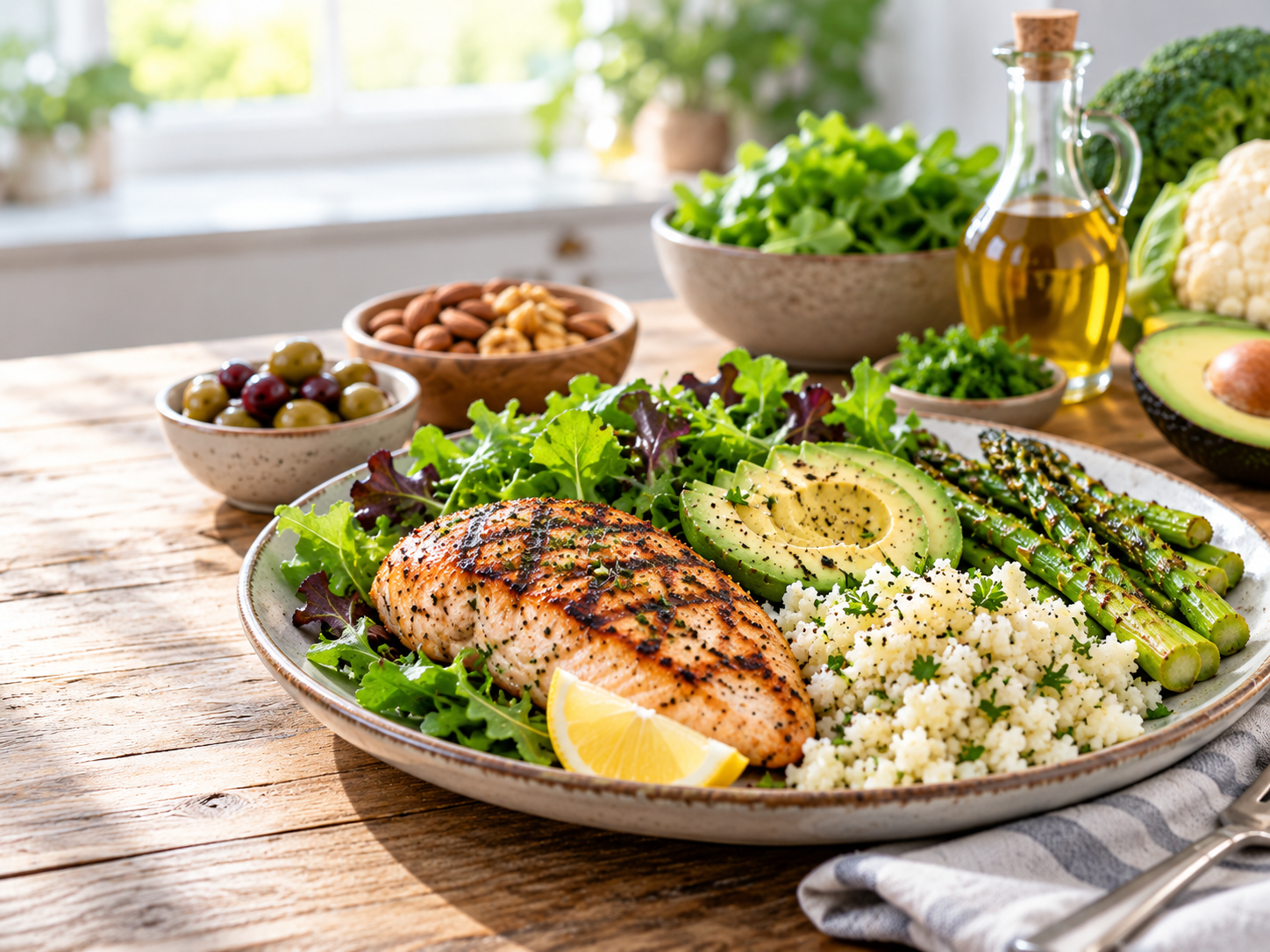
Non-starchy vegetables add fiber, vitamins, minerals, color, texture, and volume without contributing the carbohydrate load of potatoes, rice, bread, or other starches.
Fats and Cooking Staples
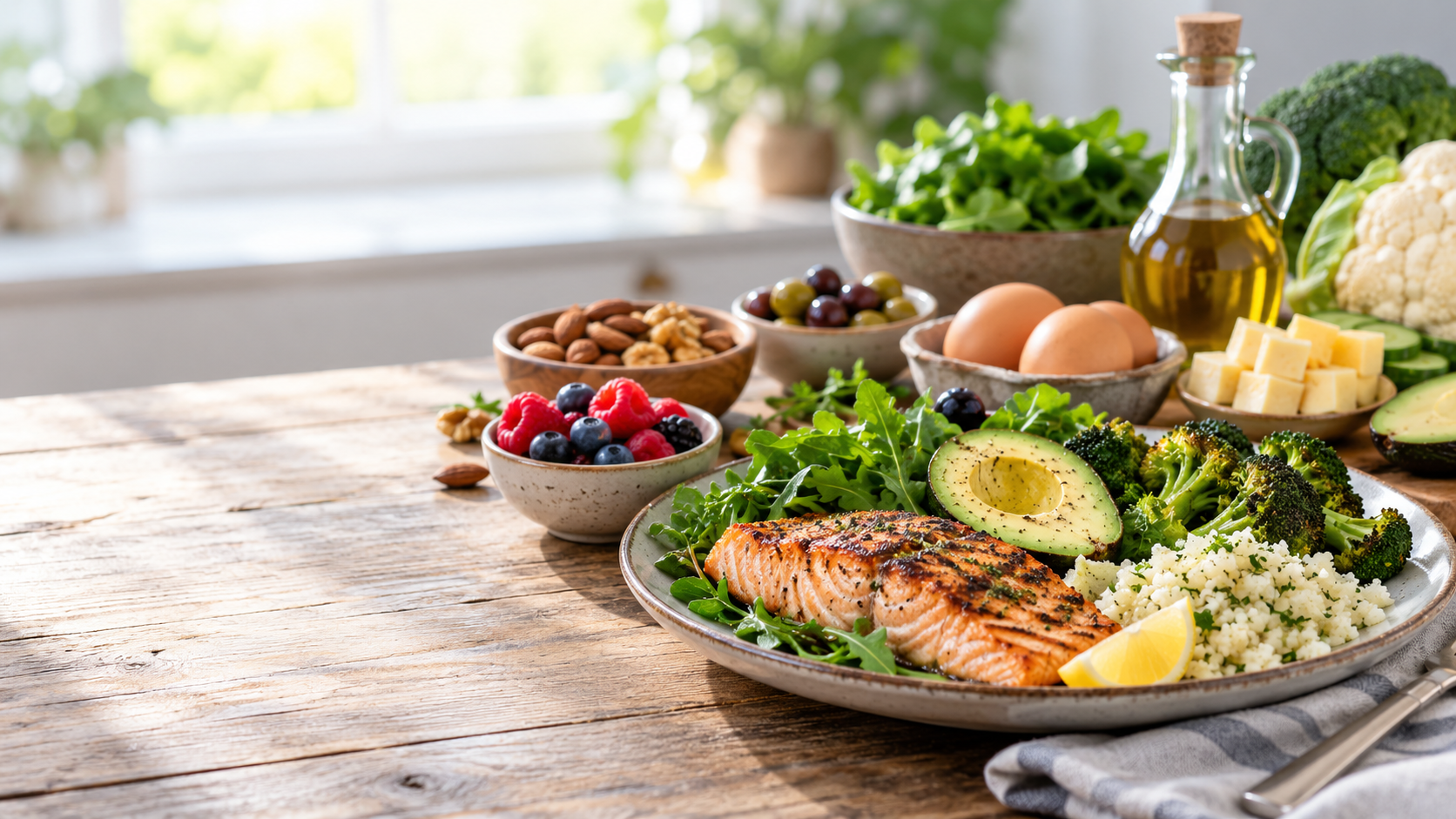
Use fats to cook, dress vegetables, and round out meals. Favor unsaturated fat sources most often.
Cooking Oils
- Extra-virgin olive oil
- Avocado oil
Whole-Food Fats
- Avocados
- Olives
- Nuts
- Seeds
Flavor Builders
- Vinegar
- Mustard
- Herbs
- Spices
- Low-sugar sauces

Dairy and Refrigerated Foods
- Cheese
- Plain Greek yogurt
- Cottage cheese
- Unsweetened low-carb milk alternatives
- Butter or cream in appropriate portions
Useful Frozen Foods
Frozen foods can make a low-carb diet considerably easier on busy nights.
Vegetables
Broccoli, cauliflower, spinach, zucchini blends, and other low-starch vegetables without sugary sauces.
Protein
Plain frozen fish, shrimp, chicken, burgers, or other unbreaded meats.
Fruit
Frozen berries can work in controlled portions for yogurt, smoothies, or desserts.
Nuts, Seeds and Simple Snacks
Nuts, seeds, cheese, and similar foods can still be calorie-dense. Low carb does not mean unlimited portions.
How to Read a “Keto” Food Label
Do not assume a product is a good choice simply because the front says “keto,” “low carb,” or “net carbs.”
- Check serving size. Small serving sizes can make the nutrition panel look better than the portion people actually eat.
- Check total carbohydrate. Use the actual Nutrition Facts panel, not just front-label marketing.
- Look at fiber. Fiber content varies widely between foods.
- Check added sugars. Sauces, yogurts, dressings, and snacks can hide significant sugar.
- Check protein. Some “keto” snacks are primarily added fat with very little protein.
- Read the ingredients. A long ingredient list does not automatically make something bad, but it tells you what you are actually buying.
Foods That Can Quickly Raise Carbohydrate Intake
Sugary Foods
Soda, candy, desserts, syrups, sweetened coffee drinks, and sweetened yogurt.
Refined Starches
Most bread, pasta, crackers, cereal, pastries, and large portions of rice.
Breaded Foods
Battered chicken, breaded fish, frozen appetizers, and similar products can add substantial carbohydrates.
These foods do not need to be labeled “bad.” They simply make it harder to remain within a strict ketogenic carbohydrate target.
A Practical Keto Grocery List for One Week
For one adult cooking most meals at home, this is a simple starting framework. Adjust quantities for household size, appetite, and the number of meals you expect to prepare.
Protein
Produce
Refrigerated
Pantry
Prefer Grocery Delivery?
You can use this list as your shopping checklist and order comparable ingredients from local stores through Instacart.
Affiliate disclosure: KetosDiets.com may earn a commission from qualifying actions through this link. Availability, pricing, retailer participation, and promotional eligibility vary.
Shop Groceries With Instacart →Turn One Grocery Cart Into Several Meals
Breakfast
Eggs with spinach, avocado, and a small portion of cheese.
Lunch
Chicken salad with leafy greens, cucumber, avocado, olives, and olive-oil vinaigrette.
Dinner
Salmon with roasted broccoli, cauliflower, and zucchini.
Snack
Plain Greek yogurt, a small handful of nuts, cheese, seeds, or olives.
How to Shop Keto Without Overspending
- Repeat ingredients: buy foods that work in several meals instead of purchasing a separate ingredient for every recipe.
- Use frozen vegetables: they last longer and reduce spoilage.
- Buy proteins strategically: chicken thighs, eggs, canned tuna, ground meat, and frozen fish can be less expensive than premium cuts.
- Skip unnecessary keto-branded snacks: ordinary foods usually provide better value.
- Use leftovers deliberately: tonight’s chicken can become tomorrow’s salad or lettuce wrap.
- Compare unit prices: large packages are only a bargain if you will actually use the food.
Reliable Source
Final Thoughts
A strong keto grocery list is built around ordinary foods rather than specialty products. Start with protein, non-starchy vegetables, quality fats, simple dairy foods, nuts, seeds, and a few dependable freezer and pantry ingredients.
Plan several meals before you shop, reuse ingredients throughout the week, and treat packaged “keto” products as optional conveniences rather than necessities.

Ketos Diets Team
Ketos Diets editorial contributor.